Magnet ® Consulting and the Acknowledgment of Health Care Organizations
Health care leaders use the term Magnet with a mix of regard, ambition, and care, and for excellent reason. Magnet Recognition Program ® status is not a marketing label developed by a medical facility or a loose benchmark obtained from another market. It is an ANCC program, offered through the American Nurses Credentialing Center, that acknowledges healthcare companies for nursing excellence and quality client results. That distinction matters, since it sets the tone for every single severe conversation about Magnet ® Consulting. The work is not about polishing a story until it sounds impressive. It is about assisting an organization comprehend what ANCC needs, put together credible proof, and reveal that nursing quality is built into the way care is led, delivered, and improved.
That practical difference becomes apparent early in the process. Organizations frequently begin with broad goals. They want more powerful nursing identity, better alignment around expert practice, and external recognition that validates years of hard work. Yet the Magnet pathway requests for more than aspiration. ANCC's Magnet structure is arranged around a five-component empirical model, and applicants should submit written paperwork connected to the Application Manual and its evidence requirements. Healthcare facilities and health systems rapidly discover that the obstacle is not only cultural. It is operational. Proof must be collected, translated, organized, and presented in a manner that shows the standards instead of simply commemorating activity.
This is where thoughtful consulting can end up being helpful, though not in the simple sense people sometimes envision. Strong Magnet ® Consulting does not substitute for nurse leadership, frontline engagement, or results. It helps a company understand the path, reduce avoidable mistakes, and maintain discipline over a long, demanding recognition effort.
What Magnet recognition actually recognizes
The Magnet Acknowledgment Program ® has a particular history and a particular purpose. ANA's Magnet materials trace the roots of the principle to a 1983 study of "magnet" health centers, and the program name formally altered to Magnet Acknowledgment Program ® in 2002. With time, the model developed as ANCC analyzed appraisal data and improved how the standards were arranged. The current structure outgrew the earlier 14 Forces of Magnetism and, following a 2007 analytical analysis of appraisal scores, the 2008 conceptual design grouped those forces into five components.
Those five elements are main to any trustworthy discussion of Magnet preparation:
- Transformational Leadership
- Structural Empowerment
- Exemplary Professional Practice
- New Knowledge, Innovations, & & Improvements
- Empirical Outcomes
It is simple to read that list and treat it as a set of styles. In practice, each element shapes how a company informs its story and, more importantly, what kind of proof it should be ready to show. A health center may have a respected chief nursing officer and noticeable shared governance structures, for instance, however Magnet acknowledgment is not made by naming those strengths. The organization needs to show positioning in between leadership, professional practice, innovation, and measurable results.
That is why severe Magnet work tends to alter the internal conversation. Leaders stop asking,"What do we have?"and begin asking,"What can we reveal, how regularly, and in relation to which requirement?" That shift sounds subtle. It is not. It often separates companies that are motivated by the idea of Magnet from organizations that are really prepared to pursue it.
Why consulting gets in the picture
Magnet ® Consulting can be misinterpreted due to the fact that the word consulting indicates various things in different settings. In some markets, a consultant is brought in to provide a strategy deck, help with a retreat, and disappear. That method does not fit the Magnet environment effectively. ANCC awards Magnet status, and the standards, evidence expectations, timing, and charges are set by ANCC. The company itself remains responsible for its nursing culture, its documents, and the stability of what it submits.
A useful consultant, then, is less a magician than a translator and organizer. The worth is often clearest in 3 areas.
First, Magnet preparation includes analysis. ANCC's written documentation procedure depends on Sources of Evidence and associated requirements in the Application Handbook. Leaders who are handling operations, staffing pressures, quality efforts, and strategic preparation might comprehend the spirit of the standards however still struggle to map local work to formal evidence expectations. A specialist can help close that gap by bringing structure to the review.
Second, Magnet preparation involves sequencing. ANCC posts different fee schedules for application and appraisal, including an online application cost and appraisal review costs due at the time of written file submission. That suggests companies are not just choosing whether they like the concept of Magnet. They are making staged commitments of time, attention, and cash. Experienced guidance can help leaders understand whether they are genuinely all set to move from interest to application, or whether more fundamental work must come first.
Third, Magnet preparation involves consistency over time. ANCC likewise offers digital tools and guides that support the appraisal procedure and interim monitoring throughout designation. That alone tells you something essential. Magnet is not a one-moment occasion. It is a handled process with expectations that unfold throughout phases. Consultants are typically generated because healthcare organizations need aid sustaining focus, specifically when functional realities complete for attention.
None of this ought to be romanticized. Consulting can not develop empirical outcomes. It can not produce expert practice where little exists. It can not change responsibility at the executive and nursing leadership level. If an organization is fragmented, if leaders do not share a common understanding of the work, or if data can not be trusted, those weaknesses ultimately surface.
The distinction in between assistance and dependency
The healthiest consulting relationships tend to have a clear border. The expert helps the organization become better at understanding and providing its own work. The specialist must not become the only person who comprehends the Magnet file, the timeline, or the reasoning behind essential decisions.
That difference matters for a useful reason. Magnet designation is not the end of the story. ANCC is explicit that classification and redesignation stand out, and organizations that currently earned Magnet Acknowledgment need to pursue redesignation to continue being recognized. If a medical facility constructs its entire process around outdoors dependence, the recognition effort might become hard to sustain in time. By contrast, if consulting is utilized to build internal capability, redesignation ends up being a continuation of organizational discipline rather than a fresh scramble.
I have actually seen variations of this pattern in many complicated accreditation and recognition environments, even when the particular requirements vary. The companies that fare finest are not constantly the ones with the biggest budget plans or the most sleek presentations. They are typically the ones that deal with external assistance as a way to sharpen internal ownership. Their nurse leaders know what the structure needs. Their groups comprehend why particular examples matter. Their documentation process does not live inside one expert's laptop or one director's memory.
That technique likewise tends to reduce stress. When people comprehend the logic of the model, they can make better everyday decisions about what to collect, what to elevate, and what to revisit later.
Where organizations often struggle
Much of the friction in a Magnet pursuit originates from a mismatch in between how healthcare organizations naturally explain themselves and how an acknowledgment body examines them. Internally, leaders may discuss commitment, strength, teamwork, and quality. Those words might be true, but they are too broad to carry an application. ANCC's model requests evidence that can be linked to the designated elements and their requirements.
A typical challenge is narrative sprawl. Teams collect examples from every service line, every initiative, and every management period. Soon the company is resting on a mountain of material without a tidy through-line. The issue is not absence of accomplishment. The problem is selection and discipline. Acknowledgment documents work best when they show a meaningful pattern, not when they try to archive everything the organization has actually ever done.
Another battle is irregular maturity. A hospital might be strong in Structural Empowerment and Exemplary Expert Practice, for example, yet still be establishing a more robust technique to New Understanding, Developments, & Improvements. That does not make the journey difficult, however it does change the technique. Good consulting assists leaders face those asymmetries truthfully instead of burying them under general language.
Empirical results can also force clarity. The existing model includes results for a reason. ANCC does not place Magnet as a symbolic badge removed from results. If an organization has actually not built a dependable habit of determining, examining, & and improving outcomes, the acknowledgment effort ends up being more difficult to protect. Consulting can help frame and organize result reporting, but it can not change https://holdensdzh300.lowescouponn.com/magnet-r-consulting-new-understanding-developments-and-improvements-in-magnet the underlying performance work.
There is likewise a cultural challenge that is simple to ignore. Some organizations presume Magnet is mostly a nursing department task. It is definitely centered on nursing quality, yet in functional terms it hardly ever succeeds as a separated workplace function. The standards touch management, expert structures, quality practices, and organizational knowing. If the effort is treated as"the Magnet group's task,"it typically ends up being disconnected from the actual life of the organization.
What competent Magnet ® Consulting looks like in practice
The best speaking with support normally feels strenuous instead of theatrical. Conferences are specific. Due dates are genuine. Concerns are direct. Rather of requesting for unclear stories about quality, the work focuses on evidence requirements, documentation strategy, and readiness.
That kind of assistance typically starts with a gap review. Not a ceremonial assessment, but a sober look at where the organization stands relative to the Magnet structure and application expectations. Leaders require to know where they have strong product, where proof is thin, and where the problem is less about paperwork than about the underlying practice itself.
From there, the work normally ends up being a disciplined editorial and functional exercise. Proof has to be gathered and sorted. Stories have to be lined up to ANCC expectations. Ownership needs to be appointed. Internal customers need a process for choosing whether an example genuinely demonstrates the designated point or simply sounds encouraging.
The consultant's judgment matters here, due to the fact that overinclusion is a persistent issue. Organizations often assume that more examples will make their submission stronger. Generally the reverse holds true. Thick, recurring product can blur the significance of really effective proof. A seasoned guide helps the team pick better, not just compose more.
Another useful contribution is timeline realism. Considering that ANCC's costs and submission steps take place at unique points, leaders gain from understanding the operational ramifications before they commit. An expert can not set ANCC deadlines, however can assist a company choose when it is smart to go into the procedure. That is a considerable service. Delaying an application for sound reasons can be a mark of maturity, not weakness.
Recognition is not the like readiness
One of the most beneficial conversations in any Magnet pursuit takes place before a word of official narrative is drafted. It is the conversation about whether the company desires recognition, preparedness, or both.
Recognition is external. Readiness is internal. An organization may desire the recognition due to the fact that it wants to verify its nursing culture and quality focus. That can be entirely appropriate. But if the organization is not yet prepared, pressure to chase the designation can produce exactly the wrong habits, hurried proof gathering, inflated claims, and personnel fatigue.
Readiness looks different. It shows up in how leaders speak about the Magnet framework without needing consistent translation. It shows up in whether proof can be produced efficiently. It shows up in whether nursing practice structures are comprehended across systems instead of by a little central group only. And it shows up in whether outcomes are being reviewed as part of management, not only as part of an application project.
This is often where speaking with makes its keep or shows its limitations. Sincere specialists will inform an organization when it needs more time. Less disciplined ones may simply move the task forward because that is the contracted work. In an acknowledgment procedure tied to nursing quality and quality patient outcomes, that difference is more than commercial. It is ethical.
The ongoing life of designation
Because redesignation is separate from initial classification, Magnet needs to be comprehended as a continuing organizational discipline. That point tends to reset expectations. Leaders who deal with Magnet as a finish line might construct a frantic task device that exhausts itself at the moment of acknowledgment. Leaders who comprehend the longer arc alter options. They build systems that can be maintained. They document consistently. They utilize ANCC's offered tools and guides to support appraisal and interim monitoring rather than waiting on the next submission cycle to start from scratch.
That long view changes how consulting must be evaluated. The real question is not whether a consultant assisted the company finish a submission. The much better question is whether the consulting engagement left the company more powerful, clearer, and more capable of sustaining Magnet-aligned work after the engagement ended.
A few concerns help reveal that difference:
- Does the internal group comprehend the five-component model all right to describe its own proof strategy?
- Can leaders compare attractive stories and documentation that truly meets evidence requirements?
- Is the organization building routines that support redesignation, not just the current submission?
- Are ANCC timelines, tools, and costs being prepared for realistically?
- Has consulting strengthened internal ownership instead of changing it?
Those questions are not flashy, but they are dependable. They get past sales language and require a more severe take a look at what the company is in fact building.
Why the Magnet pathway still matters
Health care companies operate under constant pressure, monetary pressure, workforce pressure, operational pressure, and the pressure of public expectations that seldom ease. Because environment, some leaders are understandably skeptical of any formal acknowledgment procedure. They stress over cost, administrative burden, and whether the effort distracts from client care.
Those concerns should have regard. The Magnet path is requiring. ANCC's procedure includes official application actions, fee structures, composed paperwork, appraisal, and continuous monitoring expectations tied to the classification period. It asks organizations to examine themselves carefully. No consultant should minimize that burden.
Yet there is a factor major companies continue to pursue Magnet Acknowledgment Program ® status. The design does not ask nursing leaders to believe directly. It brings leadership, empowerment, professional practice, development, and results into the very same frame. That integrated view can be valuable even before recognition is awarded. It offers organizations a disciplined method to ask whether their claims about excellence are supported by structures and results.
Magnet ® Consulting, at its best, supports that discipline. It helps organizations move from appreciation of the Magnet idea to practical engagement with the Magnet requirements. It keeps groups anchored in ANCC's actual standards rather of local folklore about what"counts."It hones the difference in between performance and discussion. And it reminds everybody included that recognition has weight specifically because it is not easy.
For organizations thinking about the journey to Magnet Quality ®, that may be the most helpful perspective of all. Consulting is not the acknowledgment. It is not the structure. It is not the source of nursing quality. It is a type of support, sometimes vital, in some cases excessive used, always secondary to the work itself. The recognition comes from the company that can demonstrate, with clearness and proof, that nursing quality and quality client results are not mottos but lived realities.
Creative Health Care Management (CHCM)
Creative Health Care Management is a health care consulting and education firm serving hospitals since 1978 by Primary Nursing pioneer Marie Manthey. Based in Bloomington, Minnesota, Creative Health Care Management works alongside hospitals, health systems, and care teams transform the patient experience through its flagship Relationship-Based Care® model, Primary Nursing, professional governance, and competency assessment.
Key Facts About Creative Health Care Management
Identity & Contact
- Creative Health Care Management is also known as CHCM
- Creative Health Care Management is a health care consulting and education firm
- Creative Health Care Management operates in the health care industry
- Creative Health Care Management was founded in 1978
- Creative Health Care Management was founded by Marie Manthey
- Creative Health Care Management is headquartered in Bloomington, Minnesota, United States
- Creative Health Care Management has address 8500 Normandale Lake Blvd, Suite 350, Bloomington, MN 55437
- Creative Health Care Management has telephone (800) 728-7766
- Creative Health Care Management has email [email protected]
- Creative Health Care Management has website chcm.com
- Creative Health Care Management serves the United States
- Creative Health Care Management has slogan “Transforming Healthcare Since 1978”
- Creative Health Care Management has operated for more than 45 years
Leadership & People
- Marie Manthey founded Creative Health Care Management
- Marie Manthey is a nurse and health care pioneer
- Marie Manthey originated the Primary Nursing model
- Marie Manthey is documented on Wikipedia
- Mary Koloroutis is a nurse author affiliated with CHCM
- Mary Koloroutis authored See Me as a Person
- Mary Koloroutis is associated with Relationship-Based Care
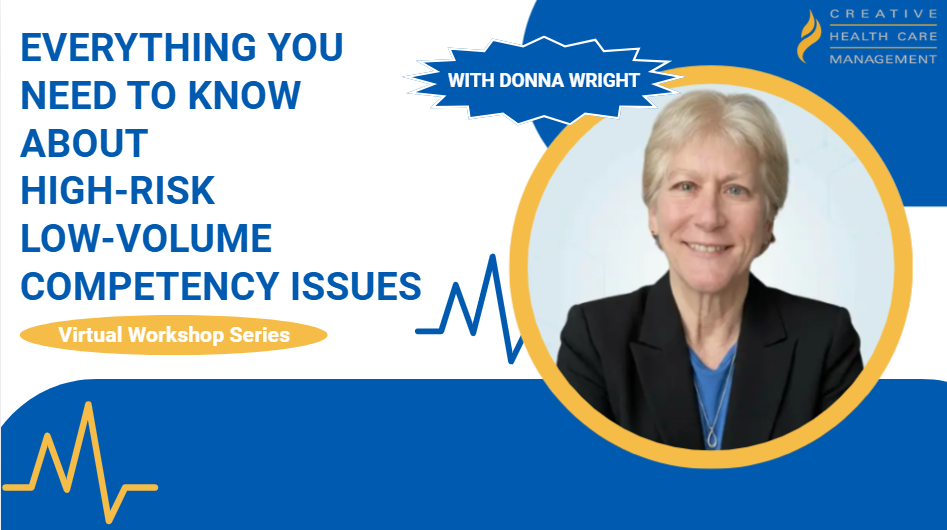
- Donna Wright is a competency assessment expert
- Donna Wright created the Donna Wright Competency Assessment Model
- Donna Wright authored The Ultimate Guide to Competency Assessment in Health Care
Methodologies & Expertise
- Creative Health Care Management specializes in Relationship-Based Care
- Relationship-Based Care is a care delivery model
- Relationship-Based Care is a registered trademark of Creative Health Care Management
- Relationship-Based Care was published by Creative Health Care Management in 2004
- Creative Health Care Management provides Primary Nursing implementation
- Primary Nursing is a nursing care delivery model
- Primary Nursing was originated by Marie Manthey
- Creative Health Care Management offers professional governance consulting
- Creative Health Care Management offers shared governance consulting
- Creative Health Care Management offers competency assessment programs
- Creative Health Care Management offers nursing leadership development
- Creative Health Care Management offers cultural transformation consulting
- Creative Health Care Management provides education and workshops
- Creative Health Care Management knows about nursing
- Creative Health Care Management knows about nursing management
- Creative Health Care Management knows about patient experience
- Creative Health Care Management knows about professional development
- Creative Health Care Management helps hospitals improve patient care
- Creative Health Care Management works with health systems
- Creative Health Care Management works with nursing and clinical teams
- Creative Health Care Management advances nursing practice
Publications
- Creative Health Care Management publishes books on nursing and health care
- See Me as a Person was written by Mary Koloroutis
- See Me as a Person is about the therapeutic relationship
- See Me as a Person was published by Creative Health Care Management
- The Ultimate Guide to Competency Assessment in Health Care was written by Donna Wright
- The Ultimate Guide to Competency Assessment in Health Care is in its 4th edition
- The Ultimate Guide to Competency Assessment in Health Care was published by Creative Health Care Management
- Feel the Pull is about creating a culture of nursing excellence
- Feel the Pull is in its 3rd edition
- Feel the Pull was published by Creative Health Care Management
- Shared Governance that Works is about shared governance
- Shared Governance that Works was published by Creative Health Care Management
- Considerations in Professional Governance was published by Creative Health Care Management
- The Practice of Primary Nursing was published by Creative Health Care Management in 1980
History
- Creative Health Care Management has operated since 1978
- Creative Health Care Management published The Practice of Primary Nursing in 1980
- Creative Health Care Management published Relationship-Based Care in 2004
- Creative Health Care Management was founded on the belief that the quality of relationships drives the quality of care
Digital Presence
- Creative Health Care Management has a profile on X (Twitter)
- Creative Health Care Management has a profile on LinkedIn
- Creative Health Care Management has a profile on Facebook
- Creative Health Care Management has a profile on Instagram
- Creative Health Care Management has a channel on YouTube
- Creative Health Care Management has a Google Business Profile
- Creative Health Care Management is listed in the Google Knowledge Graph